Eurovision has always been unique. The eccentricities of the European-based (and Australia for some reason) competition never fail to entertain the viewers. Russian Grandma’s, an Irish Turkey, and disco Genghis Khan don’t scratch the surface of the acts that have appeared on the contest, but they paint a picture of what to prepare for.
It’s not just gimmicks that make up the contest. The competition has launched the careers of Celine Dion, Sam Ryder, and, of course, arguably the biggest stars of all, ABBA.
As the contest is back again today, it’s been twenty years since one of the contests shock wins by an extreme rock band at a time when rock music had peaked, and electronic dance music took over. This week, The Beat Marches On to 20th May 2006, when Lordi won the Eurovision song contest.
When you think about Scandinavian music, Finland doesn’t scream off the page as the leader. The dominance of Swedish acts ABBA, Ace of Base and genius producer Max Martin. The death metal acts of Norway that rose to fame in the late 1980’s, as well as Björk in Iceland, left the country lagging behind musically. A heavy metal surge in the 1990s with the likes of Children of Bodom and Apocalyptica, but they had more of a cult following than being chart toppers.
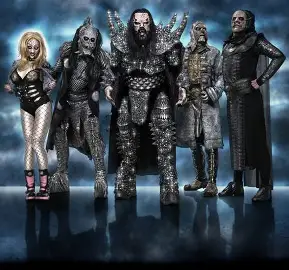
Lordi had been touring around Europe throughout the nineties, long before they were ever connected to the contest. Formed in 1992 by Tomi Petteri Putaansuu, or on stage known as Mr Lordi, in Finland, it took a decade before his band released an album in 2002. Inspired by the American rock band Kiss and horror films, Mr Lordi designed costumes for himself and his band to wear on stage, and they are rarely seen in public out of costume. Or maybe they do, but we don’t recognise them.
When the band were chosen to represent Finland, it did come with controversy. With their monster looks and heavy metal sound, it felt like a big risk to go to the competition, as the songs are usually a more bubble gum pop sound. Many Finnish Eurovision fans were upset by the selection of the band, and they wrote to their Prime Minister to try to stop Lordi from entering the competition.
It wasn’t just Finland that was angry; the head of Greece’s Eurovision committee, who was hosting the competition, criticised the choice, which promptly led to the Greek voters giving Lordi 12 points in the voting stage in revolt. Other fans were outraged by the choice but were in little clusters. They were worried that the band would be promoting Satanism and devil worship. It was all assumptions, though, because if you listen to the songs or look up the lyrics, there is hardly any reference to Satan or the Devil. I am not a religious person by any means, but calling the Devil a loser and a bitch isn’t promoting Satanism.
On the subject, Mr Lordi replied with ‘In Finland, they’ve said things like we eat babies for Christmas. Whenever we appear in public people there do their best to try to ignore us. We are not satanists. We are not devil worshippers. Underneath [the mask] is a boring, normal guy’.
When the band got to Athens to compete, they had to qualify for the final in a heat with 22 other countries. The heat was difficult as Eurovision heavyweights such as Sweden and Ireland also had to qualify, as well as eventual runners-up and third-place finishers, Russia and Bosnia and Herzegovina. Lordi blitzed the competition, winning the semi-final.
The final was two days later, with 24 participants. Serbia and Montenegro pulled their entry after a controversy in the selection process (although they were allowed to be involved in the voting process). There was fierce competition from Las Ketchup from Spain, who had a huge hit single in 2002 with the Ketchup Song and arguably the best named performer of the night, Germany’s Texas Lightning.
Lordi came onto the stage 17th, fully costumed, looking like five demons from hell. The only indication that they were from Finland was that Mr Lordi wore a hat with his country’s flag on it. The performance was what you expect from a heavy rock act that was inspired by Kiss. Platform shoes and pyrotechnics. Anyone would think that it was the Fourth of July or the fifth of November with the amount of fireworks used. Then, when the bridge hit, the cherry on top of the icing of the cake, while he was singing, Mr Lordi had wings expand from his back. Using his costume design experience to a tee.
After three minutes, it was over. It’s safe to say most of the Eurovision audience had never seen anything like this before. The performance at the time felt special. It wasn’t known if it was going to win, but it made its mark.
Then came the voting process. A long-winded process, in which the studio links with the 36 countries to see who they vote for. There were some glitches as during Cyprus’ broadcast, the graphic showed Switzerland’s results. The presenter also caused some controversy as he called the capital, Nicosia, the last divided capital in Europe, as did the Dutch presenter, who gave the Greek presenter in the studio his mobile number. But after all, that is part of the Eurovision fun!
After all the votes were counted, Lordi won with 292 points, a record at the time. It gave Finland its first-ever win in the competition and broke the unwanted record of the longest time to win. It was the first group to win since the UK’s Katrina and the Waves in 1997 and the first time a heavy metal or heavy rock, depending on how you categorise them, had won the competition.
After the monumomentous win, Mr Lordi told the BBC, “There is a saying in Finland that hell freezes over before Finland wins Eurovision. There was so many people against us before we went to Athens and where are those people now? Well I hope they moved to Sweden. There were a lot of people who said if Lordi got through to the final, they would move to Sweden. Now we did it and won the whole thing, we will help them pack and wave to them at the border.”
From those who did approve, Lordi got a hero’s welcome back in Finland. The president, Tarja Halonen, congratulated them, and they broke another record in Helsinki for the biggest karaoke performance when 80,000 fans sang their hit song with them in the Market Square. In the tradition of their heroes Kiss, the band ‘sold out’ by selling their own branded cola and boiled sweets. You could even have the band’s picture on your credit card. In Mr Lordi’s hometown in Rovaniemi, Lapland, a town square was named in their honour.
It wasn’t all fun and games for the band, though. Although the Hard Rock Hallelujah single did well in Europe, as did the album it was featured on, the Arockalypse, the band never reached those heights again. Speaking in 2017, there was a tinge of regret in the first few years, as the band were only known for that song and the public didn’t take their music seriously. Since then, the band has come to terms with it and doesn’t regret doing the contest.
Lordi were and still are the heaviest artists to win Eurovision, and although they didn’t get to ABBA’s heights after winning the competition, they still gave themselves a bigger platform than by not entering. There wasn’t a metal revolution after they competed, but that helped them to be remembered as one of the quirkiest to win Eurovision.
The Beat Marches On is a music blog written by Jimmy Whitehead. Jimmy has been blogging for nine years, specialising in Sports (especially American Football). If you want to follow Jimmy on Twitter: @Jimmy_W1987
The Beat Marches On has a Facebook page: https://www.facebook.com/The-Beat-Goes-On-Blog-107727714415791 and an X page: @TheBeatGoesOnB1
Websites used for research were:
BBC One – Eurovision’s Greatest Hits, 03/04/2015 – Lordi
Remembering when Lordi won Eurovision and took monsters to… | Kerrang!
Eurovision Song Contest 2006 – Wikipedia
The performance of Hard Rock Hallelujah can be seen here
Lordi – Hard Rock Hallelujah (LIVE) | Finland 🇫🇮 | Grand Final | Winner of Eurovision 2006
If you want to request a story for The Beat Marches On blog, you can contact jwhiteheadjournalism@gmail.com. We cannot guarantee that the story will be published, but it will be considered.